
There are two types of wind turbines: the horizontal - axis wind turbines (HAWTs) and vertical - axis wind turbines (VAWTs). The length of the blades is the biggest factor in determining the amount of electricity a wind turbine can generate. [1] Wind turbines are an increasingly. . Why are wind turbines usually built in groups called wind farms? What are the advantages and disadvantages of using wind turbines for energy? How have wind turbine designs improved over time to make them more efficient? wind turbine, apparatus used to convert the kinetic energy of wind into. . The 2 main types of turbines are Horizontal-axis Turbines (HAWT) and Vertical-axis turbines (VAWT). HAWT have the rotating axis oriented horizontally. As renewable energy technology continues to advance and grow in popularity, wind farms like this one have become an increasingly common sight along hills, fields, or even offshore in the ocean. Anything that moves has kinetic energy, and. . A wind power plant is also known as a wind farm or wind turbine.
[PDF Version]
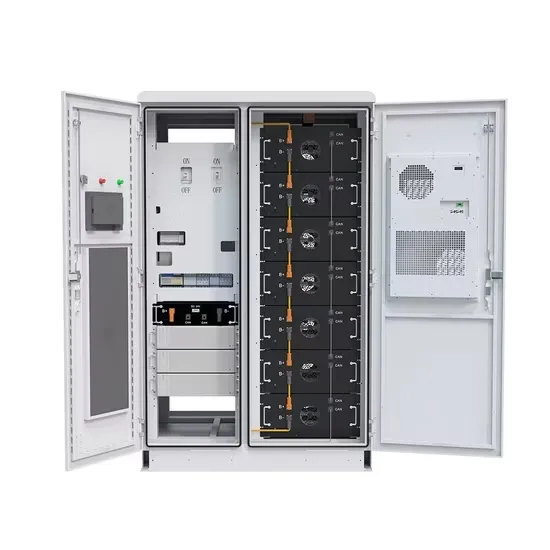
PV and wind-based hybrid power system mainly consists of 3 parts (Yu & Qian, 2009): (i) wind power generation system (which includes a wind turbine, generator, rectifiers and converters), (ii) PV power generation system, and (iii) single-phase power supply inverter. . Multi-energy complementary systems combine communication power, photovoltaic generation, and energy storage within telecom cabinets. Engineers achieve higher energy efficiency by. . The solar wind power system control cabinet is composed by wind turbine module, solar MPPT module, inverter power source, and monitor unit,etc. Managed by AI, the system ensures low-carbon, energy-efficient, and stable operation, making it suitable for off-grid or hybrid scenarios in remote locations.
[PDF Version]
To grasp the foundation of wind turbine control, it's essential to understand the three primary basic control mechanisms traditionally used: pitch control, generator torque control, and yaw control. . These invisible components monitor, regulate, and optimize turbine operations in real time—enabling energy efficiency, safety, and reliability at every rotation. Without them, turbines would simply spin blindly into the wind. From wind speed measurement and pitch control to vibration analysis and. . Housed inside the nacelle are five major components (see diagram): a. Electrical power transmission systems a. It highlights their functions, the role of control systems, and the importance of maintenance to optimize turbine performance.
[PDF Version]
Wind turbine blades are the aerodynamic structures that extract kinetic energy from moving air. Through an exploration of the evolution from traditional materials to cutting-edge. . A blade maintenance strategy is essential for the successful operation of a wind farm. But behind that elegance is a finely tuned marriage of physics, materials science, and environmental strategy. Blade design isn't just about looks; it's about. . Wind energy has become one of the fastest-growing renewable power sources, with blades playing the most critical role in capturing and converting kinetic energy.
[PDF Version]
Method to protect wind turbine blades from erosion while reducing drag and noise compared to traditional protective films. These conditions lead to progressive erosion and surface degradation, reducing aerodynamic efficiency by up to 20% and shortening the operational. . Raindrop erosion of wind turbine blades' leading edge is a critical degradation mechanism limiting wind turbine blade lifetime and aerodynamic efficiency. Protective coatings have been extensively studied to mitigate this damage. This review critically synthesises current knowledge on coating-based. . Several test rigs has been operation since 1970. Most known are Saab, Polytech, Uni Limerick, Uni Strathclyde, Fraunhofer IWES Glass fibre reinforced epoxy specimen with a coating system. Teknos' advanced coating technologies enhance the longevity of wind turbine blades and enable short process times. . Wind turbine blades (WTBs) are constantly exposed to extreme environmental exposures such as rain, sand, UV radiation, humidity, thermal cycling, and icing, all of which impact their structural integrity as well as efficiency. Resistance to abrasion and erosion caused by weathering. .
[PDF Version]
Small wind turbines, also known as micro wind turbines or urban wind turbines, are that generate electricity for . These turbines are typically smaller than those found in . Small wind turbines often have passive as opposed to active ones. They use a generator and use a tail fin to point into the wind, whereas larger turbines have that are active.
[PDF Version]
 Menu
Menu


