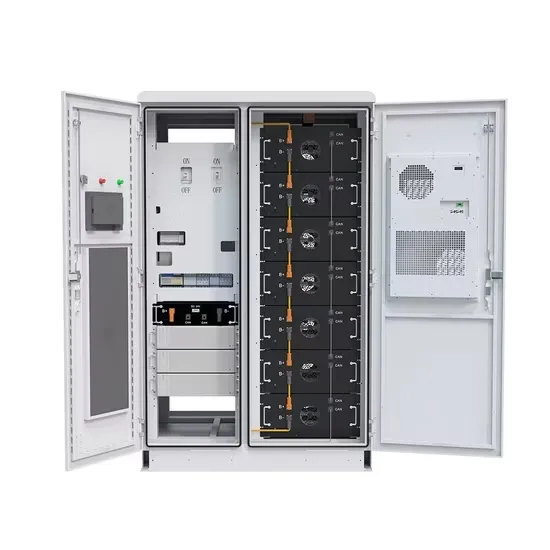
From Australia's “Big Battery” to Tesla's Mega Packs, the world is racing to improve energy storage density. Skopje could leapfrog older tech by adopting: Gravity storage (using cranes and concrete blocks—seriously!) Blockchain-based energy trading (because why not?). Skopje, a city nestled between mountains, where the wind whistles through valleys like a kid with a new toy. But here's the kicker: that wind isn't just making leaves dance—it's powering homes, businesses, and maybe even your morning espresso machine. The catch? Wind energy is as unpredictable as a. . Skopje, 25. 2024 – Alcazar Energy Partners, a leading investor in renewable energy within growth markets, announces the launch of the largest wind farm project in North Macedonia with a capacity of up to 400 MW. Packed with insights into solar, wind, hydro, and storage developments, regulatory frameworks, and investment opportunities, it is designed to inspire and inform decision- Western Balkans' energy transition1. New Prime Minister Hristijan Mickoski supported the project. North Macedonia on Wednesday marked the start of construction of its biggest-yet wind farm, a €430 million investment by. .
[PDF Version]
Summary: North Korea's growing focus on solar energy storage batteries reflects its push for energy independence amid resource constraints. This article explores current trends, technical advancements, and real-world applications shaping this niche market. Learn how industries like renewable energy and infrastructure are adopting these solutions to address power stability challenges. North Korea's. . The Yeongdong PSH Plant, with a total capacity of 500 MW (250 MW x 2 units), is scheduled to be built in Yeongdong County, North Chungcheong Province, by 2030. These systems are the unsung heroes powering everything from solar farms to industrial complexes in the Hermit Kingdom. With the global energy storage. .
[PDF Version]

As of 2024, the average cost of lithium-ion battery storage systems in North Macedonia ranges between €400/kWh and €650/kWh, depending on scale and technology. Solar+storage hybrid projects now account for 18% of new renewable installations, according to the Ministry of Economy. Lead-acid batteries: The old-school workhorse at €200–€300/kWh—cheaper upfront but shorter lifespan. Flow batteries: The new kid. . North Macedonia is rapidly adopting renewable energy solutions, and energy storage systems (ESS) are becoming critical for stabilizing the grid and reducing reliance on fossil fuels. This article explores the latest trends in energy storage equipment costs, analyzes key drivers, and highlights. . Global Lithium Ion Battery Storage Cabinet Market Research Report: By Capacity (Below 100 kWh, 100-200 kWh, 200-500 kWh, Above 500 kWh), By Application (Residential and commercial energy storage, Electric vehicle charging, Grid support), By Chemistry (Lithium-ion (Li-ion), Lithium-iron phosphate. . As North Macedonia accelerates its transition to renewable energy, lithium battery storage systems are emerging as a game-changer. In Skopje, four factors play tag team: 1. Raw Materials: The "Lithium Rollercoaster" Lithium carbonate prices swung from $7,000/ton in 2020 to $80,000/ton in 2022.
[PDF Version]
Major projects now deploy clusters of 20+ containers creating storage farms with 100+MWh capacity at costs below $280/kWh. North Korea's electricity generation capacity reportedly stands at just 35% of demand, with rural areas experiencing daily. . Access to solar panels has created capacity where the state falls short, but the overall energy security challenges facing the nation are daunting. Here's what's driving their focus: Solar power adoption: Rural areas. . Summary: North Korea's growing focus on solar energy storage batteries reflects its push for energy independence amid resource constraints. This article explores current trends, technical advancements, and real-world applications shaping this niche market.
[PDF Version]

Solar resource and PV power potential maps and GIS data can be downloaded from this section. Please select a region or a country in the menu below. . North Macedonia is undergoing a decisive energy transition, rapidly transforming its energy mix through photovoltaics (PV), which is becoming the fastest-growing renewable technology. This unprecedented expansion, driven by the European Union's Clean Energy Package, has led the country to achieve. . at Energy Week Western Balkans fosters. Packed with insights into solar, wind, hydro, and storage developments, regulatory frameworks, and investment opportunities, it is designed to inspire and inform decision- Western Balkans' energy transition1. By 2023, renewables accounted for 50% of the. . Solarvance » Countries » The technical potential of solar power in North Macedonia is substantial, capable of forming a cornerstone of a secure and decarbonized national energy supply Geographical Location: North Macedonia is a landlocked country in Southeastern Europe, located in the central. . North Macedonia has a good location and climate, with a large number of sunny days a year. Solar radiation ranges from 1 168 kWh/m2 to 1 650 kWh/m2, but the sun, as a renewable and never-ending source of energy, especially to produce electricity, is unfortunately the least used. With 900 MW now installed, the country's solar sector is scaling rapidly. Dimitar Dimitrov stresses the need for storage, grid modernisation and. .
[PDF Version]

Let's face it – North Asia's energy landscape is changing faster than a Siberian winter storm. With countries like China, Japan, and South Korea pushing aggressive renewable energy targets, distributed energy storage systems (DESS) have become the region's. . That's the promise of the North Asia Energy Storage Power Station System – a game-changer for industries struggling with energy inconsistency. From stabilizing power grids to enabling round-the-clock renewable energy, this technology is reshaping how North Asia powers its factories, cities, and. . While Elon Musk's Powerwall grabs headlines, North Asian manufacturers have been quietly revolutionizing heat storage. The region's market grew 18% YoY in 2024 – that's enough stored energy to power Tokyo for 3 days during peak demand [5]. [pdf] ☎+86-738-8289800📩liuhui@skylightor (email)Whatsapp:. . In 1949, the prime minister,, offered Harry Zvi Tabor a job on the 'physics and engineering desk' of the Research Council of Israel, which he accepted. He created an Israeli national laboratory and created standards amongst the different measurements in use in the country, primarily, and. But here's the kicker: nearly 68% of commercial solar projects still experience energy waste due to inadequate storage solutions.
[PDF Version]
 Menu
Menu