Wind turbines use blades to collect the wind's kinetic energy. Wind flows over the blades creating lift (similar to the effect on airplane wings), which causes the blades to turn. The blades are connected to a drive shaft that turns an electric generator, which produces (generates). . In this post, you will learn about the wind power plant and its diagram, working, the importance of wind energy, advantages, application and more. What is Wind Power Plant? The wind is the natural circulation of air across the land or. . Understanding the system diagram of a wind turbine is essential to comprehend its functioning and efficiency. . Let's start by exploring how wind energy works, and what makes it a viable option for powering our homes and communities worldwide.
[PDF Version]

The figure below shows a sketch of how the power output from a wind turbine varies with steady wind speed Example of a typical wind turbine power curve (for illustration only). The figure below shows a sketch of how the power output from a wind turbine varies with steady wind speed Example of a typical wind turbine power curve (for illustration only). One way to measure peak performance is to use a table or graph of a wind turbine power curve. Another way is to measure the amount of usable energy (power produced over time) that the wind system produces in the wind conditions at a site. Wind turbine peak performance occurs when the output of the. . The theoretical and rated wind power generation from a typical windmill is indicated in the "wind speed-power curve" below. Cut-in wind speed, rated wind speed, shut-down wind speed and rated power for windmills with 20% and 40% efficiency. This graph is an important tool for evaluating the performance and suitability of wind turbines.
[PDF Version]
A wind turbine system diagram is a visual representation of the components and their connections in a wind turbine system. Also, you can download the PDF file at the end of this article. What is Wind Power Plant? The wind is the natural circulation of air across the land or. . Reactive power is the component of electrical power that does not perform any useful work but is necessary for the generation, transmission, and distribution of electricity. Reactive power is essential for. . wind energy being at the forefront. Wind speeds vary based o geography, topography, and season. Working Principle of Wind Turbine: The turbine blades rotate when wind strikes them, and this rotation is converted into electrical energy. . This article contains technical recommendations for power flow representation of wind power plants (WPP) in the Western Electricity Coordinating Council (WECC), and was prepared by the WECC Renewable Energy Modeling Task Force (REMTF).
[PDF Version]
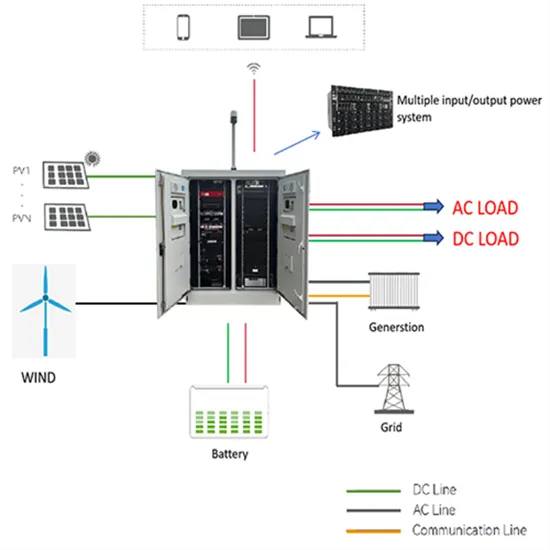
We'll also delve into the different types of turbines and provide diagrams to help illustrate key concepts. Whether you're an environmental enthusiast or simply looking for ways to reduce your carbon footprint, this guide is designed to equip you with the knowledge needed to harness nature's power. . Understanding the system diagram of a wind turbine is essential to comprehend its functioning and efficiency. The animation below is interactive. You can start and stop the turbine's movement, hover over parts to see their description, and use the icons in the lower right corner of the animation. . Harvesting wind power isn't exactly a new idea – sailing ships, wind-mills, wind-pumps 1st Wind Energy Systems – Ancient Civilization in the Near East / Persia – Vertical-Axis Wind-Mill: sails connected to a vertical shaft connected to a grinding stone for milling Wind in the Middle Ages – P t Mill. . wind energy being at the forefront. Wind energy refers to the technology that converts the air's motion into mechanical energy, 's motion into mechanical energy.
[PDF Version]
Each technology offers unique advantages and limitations, from scalability to reliability and environmental impact. . Solar, wind, and hydro energy are the leading renewable sources shaping the global transition away from fossil fuels. Solar provides distributed energy solutions, wind harnesses. . In our latest Short-Term Energy Outlook, we forecast that wind and solar energy will lead growth in U. power generation for the next two years. We can give. . Different methods of electricity generation can incur a variety of different costs, which can be divided into three general categories: 1) wholesale costs, or all costs paid by utilities associated with acquiring and distributing electricity to consumers, 2) retail costs paid by consumers, and 3). .
[PDF Version]
Stainless steel mesh cloth and aluminium screens and copper mesh are the most preferred woven wire mesh in wind turbines due to their light weight and extraordinary corrosion resistance property. In this guide, learn a proven multi-block workflow that keeps y⁺stable, reduces skewness, and delivers high-fidelity CFD results you can trust. Wind turbine engineers. . However, UVLM-based solvers require structured meshes, which are generally very tedious to build using classical mesh generators, such as those utilized in the context of finite element methods (FEMs). Wind farm meshing is further complicated by the large number of design parameters associated with. . Automating mesh generation by breaking down the CAD geometry into high-quality discrete cells can deliver accurate CFD predictions. The wind farm mesher is fully automatic and, given the topography and the turbine characteristics (location, diameter and hub height), it generates. .
[PDF Version]
 Menu
Menu


