Recently, the Mexican Ministry of Energy announced a new regulation mandating that all newly built wind and solar PV projects must be equipped with energy storage systems accounting for at least 30% of their capacity, with a minimum storage duration of three hours. Mexico has for the first time brought battery energy storage systems (BESS) within the scope of its mandatory Social Impact Assessment framework, following the publication by the. . According to the Power Sector Development Plan 2025–2039, Mexico will add 19,954 MW of renewable energy and 5,000 MW of energy storage by 2030. For the first time, storage is no longer a regulatory afterthought. That upgrade carries opportunity – new revenue streams, improved resiliency, tariff arbitrage – and new obligations, including permits. . On 7 March 2025, the Official Journal of the Federation published the final agreement of the Energy Regulatory Commission (CRE) that establishes the administrative provisions for the orderly and efficient integration of storage systems into the National Electricity System (SEN).
[PDF Version]
From batteries to mechanical and thermal storage, we'll dive into the five categories that are transforming the way we harness and store energy in a sustainable and efficient era. They are also referred to as clean energy as they do not contribute to carbon emissions, which makes them non-polluting. These energy sources mainly cater to areas like-generation of. . Renewable energy is energy from sources that are naturally replenishing but flow-limited; renewable resources are virtually inexhaustible, but they are limited by the availability of the resources. The most widely used renewable energy types are solar energy, wind power, and hydropower. Currently the most popular energy sources are: Each source has its own strengths and weaknesses, and only with a combination of all of them can we hope to reach net zero.
[PDF Version]
Today, renewables account for less than 1% of Kuwait's electricity generation, but the country aims to grow that to 15% by 2030, with natural gas serving as a crucial transitional fuel. However, Rystad Energy analysis shows this lofty target could be out of reach. . Kuwait is grappling with relentless heat, aging infrastructure and unplanned power outages, prompting major investments in grid reliability. Their growing. . Renewables are an increasingly important source of energy as countries seek to reduce their CO2 emissions and dependence on imported fossil fuels. The final chapter of this report suggests a more sustainable path forward, but it will take a committed effort on the part of the. . Greenhouse gas emissions, primarily from the energy sector, are causing global warming & have an impact on natural ecosystems. As such, there is a worldwide movement to transition to a less carbon-intensive energy system.
[PDF Version]
Bioenergy is a type of that is derived from plants and animals. The that is used as input materials consists of recently living (but now dead) organisms, mainly plants. Thus, are not regarded as biomass under this definition. Types of biomass commonly used for bioenergy include wood, food crops such as corn, and waste from forests, yards, or farms. Bioenergy can al.
[PDF Version]

The German Government and the European Union launch in Kampala the GET ACCESS Mini-grid Solar Programme, a 35 million Euro initiative to support the electrification of Uganda's rural areas and contribute to the transition towards renewable energy. . The Minister of Energy and Mineral Development, Ms. Ruth Nankabirwa Ssentamu, signs a document at the opening of the Renewable Energy Conference (REC) 2025 and Expo in Kampala on October 20, 2025. PHOTO/PHILIP WAFULA "Uganda has a bold ambition to transform over 50 percent of Ugandans to clean. . The Integrated Waste-to-Energy Biogas Production, Cylinder Packaging and Liquid Biofertilizer Facility, officially launched this week, is designed to convert organic waste into clean biogas and agricultural inputs. With a track-record since 2016, ARE. . The fist Africa Electricity Symposium, held from 25 to 27 June 2025 in Kampala, marked a significant milestone in Africa"s energy journey. GET ACCESS will provide first time access to. . EU Ambassador to Uganda Jan Sadek affirmed the forum's role as a catalyst for action and innovation, highlighting the EU-Africa Global Gateway Investment Package's allocation of EUR 150 billion to Africa between 2021 and 2027 to support sustainable development. KAMPALA, Uganda — The Energy Access. .
[PDF Version]

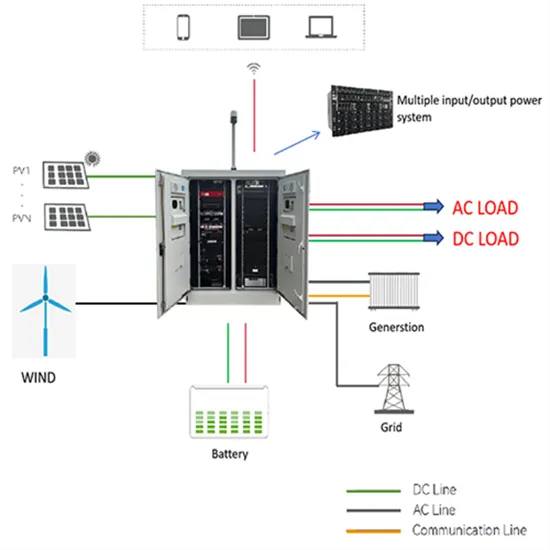
This article explores the growing role of energy storage in Swaziland's renewable energy transition, highlights real-world applications, and provides actionable insights for industries seeking resilient power solutions. . In Swaziland, energy storage systems are revolutionizing how businesses and communities access reliable electricity. To cope with the problem of no or difficult grid access for base stations, and in line with the policy trend of energy saving and emission reduction, Huijue Group has launched an. . The Sigcineni Off-Grid Solution project by the Eswatini Electricity Company includes a 200kWh battery energy storage system and a 35kW mini-grid solar project. The Sigcineni Off-Grid Solution project began as a small-scale off-grid pilot study into the use of solar technology to meet rural. . ICEENG CABINET serves customers in 18+ countries across Africa, providing outdoor communication cabinets, power equipment enclosures, and battery energy storage cabinets for telecommunications, utilities, and industrial applications.
[PDF Version]
 Menu
Menu