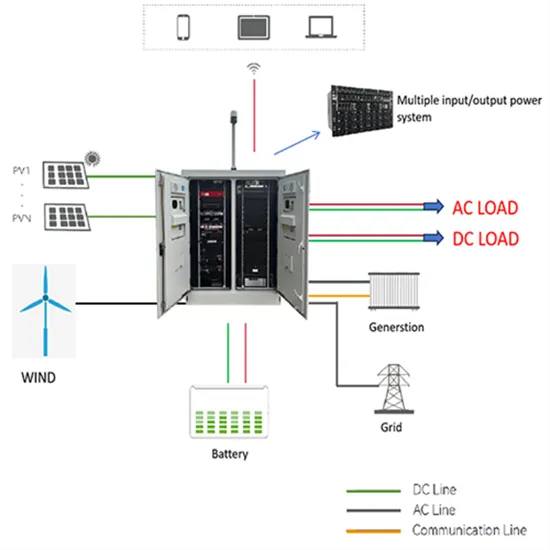
In a recent landmark auction, the North Macedonian government received 44 bids for battery storage projects, totaling an impressive 4. This ambitious move is a cornerstone of the country's strategy to modernize its energy infrastructure and transition away. . By 2027, North Macedonia's Battery Energy Storage market is forecasted to achieve a stable growth rate of 3. 47%, with Germany leading the Europe region, followed by United Kingdom, France, Italy and Russia. This article explores applications, market trends, and innovative case studies in the Balkan region. These systems store electricity using batteries, helping stabilize the grid, store renewable energy, and provide backup power. In 2024, the market grew by 52%. .
[PDF Version]

As of 2024, the average cost of lithium-ion battery storage systems in North Macedonia ranges between €400/kWh and €650/kWh, depending on scale and technology. Solar+storage hybrid projects now account for 18% of new renewable installations, according to the Ministry of Economy. . Western Balkans' energy transition1. This progress has been driven by a wave of solar photovoltaic (PV) projects and supportive policy reforms, even as the country. . Electricity generation from solar power plants lowers prices on the power exchange, while a decrease in generation leads to price increases, according to an analysis by Ana Angelova, a market operations specialist at the National Electricity Market Operator (MEMO). This article explores the latest trends in energy storage equipment costs, analyzes key drivers, and highlights. . But how much does it cost to keep the lights on when the sun isn't shining? Let's break it down: Lithium-ion batteries: The MVP of storage, averaging €450–€600/kWh [1]. Lead-acid batteries: The old-school workhorse at €200–€300/kWh—cheaper upfront but shorter lifespan. Battery Technology: Lithium-ion (LiFePO4) dominates the market, but flow batteries are gaining traction for long-duration storage. Find out more in our daily focus, 15–18 September. Favourable geography and climate support both. .
[PDF Version]

As of 2024, the average cost of lithium-ion battery storage systems in North Macedonia ranges between €400/kWh and €650/kWh, depending on scale and technology. Solar+storage hybrid projects now account for 18% of new renewable installations, according to the Ministry of Economy. Lead-acid batteries: The old-school workhorse at €200–€300/kWh—cheaper upfront but shorter lifespan. Flow batteries: The new kid. . North Macedonia is rapidly adopting renewable energy solutions, and energy storage systems (ESS) are becoming critical for stabilizing the grid and reducing reliance on fossil fuels. This article explores the latest trends in energy storage equipment costs, analyzes key drivers, and highlights. . Global Lithium Ion Battery Storage Cabinet Market Research Report: By Capacity (Below 100 kWh, 100-200 kWh, 200-500 kWh, Above 500 kWh), By Application (Residential and commercial energy storage, Electric vehicle charging, Grid support), By Chemistry (Lithium-ion (Li-ion), Lithium-iron phosphate. . As North Macedonia accelerates its transition to renewable energy, lithium battery storage systems are emerging as a game-changer. In Skopje, four factors play tag team: 1. Raw Materials: The "Lithium Rollercoaster" Lithium carbonate prices swung from $7,000/ton in 2020 to $80,000/ton in 2022.
[PDF Version]
Summary: North Korea's growing focus on solar energy storage batteries reflects its push for energy independence amid resource constraints. This article explores current trends, technical advancements, and real-world applications shaping this niche market. Learn how industries like renewable energy and infrastructure are adopting these solutions to address power stability challenges. North Korea's. . The Yeongdong PSH Plant, with a total capacity of 500 MW (250 MW x 2 units), is scheduled to be built in Yeongdong County, North Chungcheong Province, by 2030. These systems are the unsung heroes powering everything from solar farms to industrial complexes in the Hermit Kingdom. With the global energy storage. .
[PDF Version]
Today, renewables account for less than 1% of Kuwait's electricity generation, but the country aims to grow that to 15% by 2030, with natural gas serving as a crucial transitional fuel. However, Rystad Energy analysis shows this lofty target could be out of reach. . Kuwait is grappling with relentless heat, aging infrastructure and unplanned power outages, prompting major investments in grid reliability. Their growing. . Renewables are an increasingly important source of energy as countries seek to reduce their CO2 emissions and dependence on imported fossil fuels. The final chapter of this report suggests a more sustainable path forward, but it will take a committed effort on the part of the. . Greenhouse gas emissions, primarily from the energy sector, are causing global warming & have an impact on natural ecosystems. As such, there is a worldwide movement to transition to a less carbon-intensive energy system.
[PDF Version]

This article provides an in-depth analysis of the Mexico solar energy market, including its meaning, executive summary, key market insights, market drivers, market restraints, market opportunities, market dynamics, regional analysis, competitive landscape, segmentation . . This article provides an in-depth analysis of the Mexico solar energy market, including its meaning, executive summary, key market insights, market drivers, market restraints, market opportunities, market dynamics, regional analysis, competitive landscape, segmentation . . The Mexico Solar Energy Market is expected to grow from 13. 94 gigawatt in 2026 and is forecast to reach 30. Rising deployment is anchored in President Claudia Sheinbaum's 45% clean-power goal for 2030, abundant irradiance. . The Mexico solar energy market, valued at USD 7. 9 billion, is expanding due to increasing renewable energy demand, supportive policies like the Energy Transition Law, and key segments like residential end-users. 3 GW by 2034, exhibiting a growth rate (CAGR) of 9.
[PDF Version]
 Menu
Menu