This New Zealand-designed and fabricated cabinet is AS1940:2017 compliant, lockable, and mobile, providing a practical plug-and-play solution for managing the fire risks associated with lithium-ion batteries. This robust safety cabinet is constructed to prevent or. . Our Lithium-ion Battery Cabinets are designed to minimise this risk through controlled, ventilated and secure containment. It meets strong fire-safety rules and has a smoke alarm. You can add a fire-spraying system for extra safety. Sensors help keep the temperature and moisture steady. Extra space inside gives more storage options for larger batteries (think scooters, e-bikes etc) as. .
[PDF Version]

These tariffs come with device automation (e., for EV charging) that gives guaranteed lower prices in return for letting the supplier schedule the charging within the boundaries set by the user (e., departure time, minimum state of charge). . Any pathway to mitigate climate change requires the rapid reduction of CO2 emissions and deployment of negative-emissions technologies to cut atmospheric concentrations of greenhouse gasses. Electromobility is an important way of enabling this reduction and technological advances and smart. . The cost per kilowatt-hour (kWh) at public chargers can range from very affordable in renewable-powered countries to relatively expensive in regions with high taxes or fossil fuel-dependent grids. Add in peak-hour pricing and subscription plans, and the difference between a well-planned charge and. . Energy-based charging rates are widely considered to be the easiest to understand by consumers and ensure all drivers pay a consistent rate for the electricity they use. Now, let's discover the following: Pick the one that you're most interested in, or keep on reading to get a full understanding of. . China has already implemented some of the world's most extensive time-of-use (TOU) tariffs for commercial charging stations and is gradually expanding residential coverage for its 36 million EVs. By 31 December 2027: Charging locations with at least 600. .
[PDF Version]
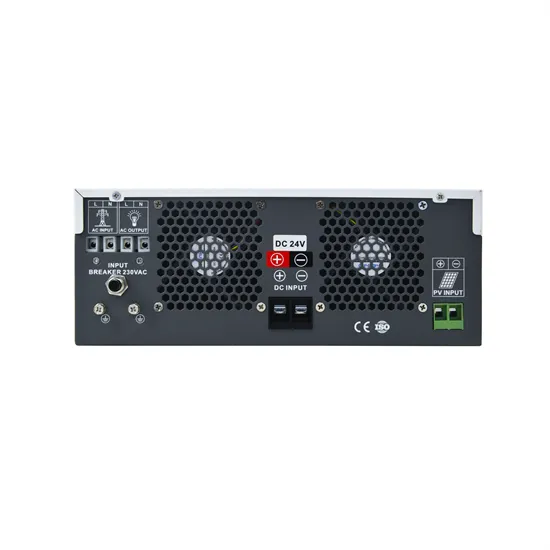
Pole-Mounted Outdoor Power Cabinet - Corrosion-Resistant Electrical Enclosure for Energy Storage Product Overview This rugged IP55-rated cabinet provides stable AC/DC power conversion (48V output) for outdoor applications. . The vanadium redox battery (VRB), also known as the vanadium flow battery (VFB) or vanadium redox flow battery (VRFB), is a type of rechargeable which employs ions as. usable PV i provided by the battery cell manufacturer. Based on cell test condition of 25±2°C, . SCU uses standard battery modules, PCS modules, BMS, EMS, and other systems to form standard containers to build large-scale grid-side energy storage projects. Why should you choose a solar storage container? Customize your container according to various configurations, power outputs, and storage. . This study demonstrates that integrating photovoltaic systems into super high-rise buildings can enhance their earthquake resilience by contributing to better stress dis-tribution, reduced. Standard SEISMIC-Cabinets fulfil all requirements of DIN EN 50272-2. The parts are electrically conducting. . Most industrial off-grid solar power sytems, such as those used in the oil & gas patch and in traffic control systems, use a battery or multiple batteries that need a place to live, sheltered from the elements and kept dry and secure.
[PDF Version]
High-efficiency Mobile Solar PV Container with foldable solar panels, advanced lithium battery storage (100-500kWh) and smart energy management. Ideal for remote areas, emergency rescue and commercial applications. Fast deployment in all climates. . Hybrid E5 Energy Storage Systems Delta"s all-in-one residential energy storage system is designed to optimize power usage from your solar PV system. Trinasolar brings to Thailand a full suite of PV and storage offerings, fresh from its global showcase at SNEC. . At Asia Sustainable Energy Week (ASEW) 2025 on 2-4 July in Bangkok, Trinasolar, a global leader in smart PV solar and energy storage solutions, will debut its latest PV + storage technologies in the Thai market.
[PDF Version]

Summary: This article explores the critical construction standards for energy storage systems in steel plants, addressing safety protocols, efficiency benchmarks, and compliance requirements. Learn how optimized energy storage solutions can reduce operational costs and enhance sustainability in. . • Cells with up to 12,000 cycles. • Lifespan of over 5 years; payback within 3 years. • Three-level fire protection. . LEWCO Controlled Temperature Storage Cabinets are the most common and economically priced solution for temperature-controlled storage. All models feature our signature all-welded steel, heavy-duty construction, and simple user-friendly controls. With a strong focus on safety, modularity, and long-term performance, SLENERGY's energy storage cabinets deliver a reliable. . AZE's all-in-one IP55 outdoor battery cabinet system with DC48V/1500W air conditioner is a compact and flexible ESS based on the characteristics of small C&I loads. The commerical and industrial (C & I) system integrates core parts such as the battery units, PCS, fire extinguishing system. . Multi-dimensional use, stronger compatibility, meeting multi-dimensional production and life applications High integration, modular design, and single/multi-cabinet expansion Zero capacity loss, 10 times faster multi-cabinet response, and innovative group control technology Meet various industrial. .
[PDF Version]
A compact, lightweight, long-lasting and sophisticated energy storage solution for 3-phase uninterruptible power supplies. Reduce total cost of ownership. Increase availability and resiliency of your critical power infrastructure. . Since 2008, EcoSun (Cambodia) Co., Ltd has been providing Cambodian households with a comprehensive range of solar-powered appliances and solar solutions. The Galaxy Lithium-ion Battery Cabinets for 3-phase UPSs are. . In very remote rural areas, the only source of electricity may be a small portable generator. The Government of Cambodia set a goal of electrifying all villages by 2020 and connecting at least 90 percent of all households to grid-quality electricity by 2030.
[PDF Version]
 Menu
Menu


