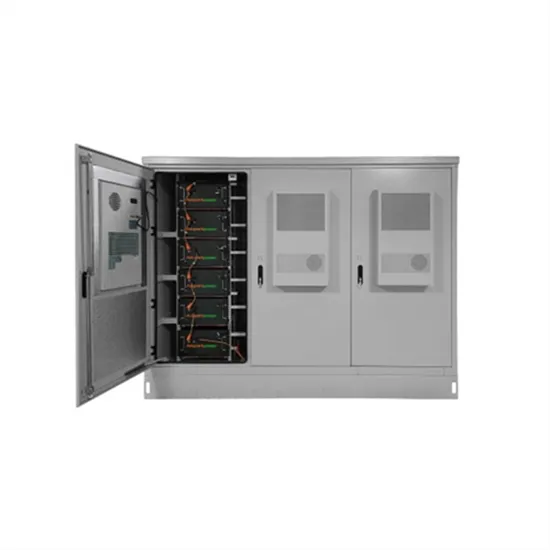
It is reported that the project plans to construct a 300 MW photovoltaic system and a 90 MW/360 MWh energy storage system. Upon completion, it is expected to provide approximately 674 million kilowatt-hours of clean electricity annually. During a ceremonial event today, a time capsule was placed to symbolize the official start of the future power plant. . Kazakhstan has launched construction on its largest solar power plant, a landmark 300 MW facility in the Turkestan region. This ambitious project, a significant leap forward for the nation's renewable energy sector, is being developed through a strategic partnership between Kazakhstan's. . The two sides plan to build a solar power station with an installed capacity of 300 megawatts in Sauran District, Turkestan region of Kazakhstan, with a total investment of 320 million US dollars. To read the full news articles, Subscribe.
[PDF Version]
Summary: Explore how liquid cooling energy storage systems are transforming Almaty's energy landscape. Discover their applications in renewable integration, grid stability, and industrial efficiency—backed by real-world examples and data. . Almaty region continues to strengthen its role as a national leader in the development of renewable energy. These include 8 hydroelectric power plants (HPPs) with a capacity. . Construction officially commenced on the largest clean energy power station in Kazakhstan – project to modernize (coal to gas conversion) the Almaty CHP-2 – on July 1.
[PDF Version]
It is reported that the project plans to construct a 300 MW photovoltaic system and a 90 MW/360 MWh energy storage system. Upon completion, it is expected to provide approximately 674 million kilowatt-hours of clean electricity annually. . The project marks an important step in Kazakhstan's energy transition, enhancing energy security and enabling greater integration of renewable energy sources. The total investment is estimated at USD 350 million. Search all the latest and upcoming battery energy storage. . According to the Embassy of Kazakhstan in China, on December 15 local time, the Sauran 300 MW photovoltaic power generation project in Kazakhstan officially commenced construction. To read the full news articles, Subscribe.
[PDF Version]
To address this issue, this paper proposes a two-stage optimal scheduling strategy for peak shaving and valley filling, taking into account Photovoltaic (PV) systems, EVs, and Battery Energy Storage Systems (BESS). Together, they optimize energy consumption and reduce costs. Energy storage systems (ESS), especially. . Peak shaving is a technique employed to reduce the load on the electricity grid during peak usage times. By lowering peak demand, companies can significantly diminish the risk of. . The significant volatility of distributed generation and the uncoordinated charging behavior of Electric Vehicles (EVs) exacerbate the peak-valley disparity in industrial park distribution networks, adversely affecting the stable operation of power systems. Discover real-world applications, policy impacts, and innovative solutions driving the renewable energy revolution. Why Peak Shaving and Valley Filling Matte Summary: Explore. .
[PDF Version]

The project began construction in July 2017 and was fully connected to the grid in September 2019, with a total installed capacity of 700,000 megawatts, of which 200,000 megawatts of photovoltaic projects, 400,000 megawatts of wind power projects, 50,000 kilowatts of solar. . The project began construction in July 2017 and was fully connected to the grid in September 2019, with a total installed capacity of 700,000 megawatts, of which 200,000 megawatts of photovoltaic projects, 400,000 megawatts of wind power projects, 50,000 kilowatts of solar. . As Pakistan's capital city expands, the Islamabad Power Plant has become a testing ground for cutting-edge energy storage projects that address both urban energy demands and renewable integration challenges. This deep dive reveals how these initiatives are transforming electricity management while. . has a total installed power generation capacity of 49,270 as of 13 September, 2024 which includes 28,766 MW thermal, 11,519 MW hydroelectric, 1,838 MW wind, 780 MW solar, 249 MW bagasse, 3,620 MW nuclear and 2,498 MW of capacity. This initiative addresses energy instability, supports solar/wind integration, and positions the city as a leader in clean tech.
[PDF Version]

The project was developed by Abu Dhabi-based Masdar. It pairs a 250 MW solar PV array with a 63 MW/126 MWh battery energy storage system (BESS). The Nur Bukhara project also continues to advance Uzbekistan's push for a modernized power grid and reduce emissions. . Uzbekistan's first utility-scale solar and battery storage facility, the Nur Bukhara PV and BESS project has been officially inaugurated by President Shavkat Mirziyoyev. The President also. . The Project involves the construction, ownership and operation of solar power plants that can generate 1,000 MW, equivalent to the annual electricity consumption of approximately 600,000 households, and large-scale battery energy storage systems (BESS), with a total storage capacity of 1,336 MWh. . The President of the Republic of Uzbekistan, His Excellency Shavkat Mirziyoyev, inaugurated the Nur Bukhara project, the country's first utility-scale integrated solar and battery project, developed by Abu Dhabi Future Energy Company PJSC (Masdar). Mirziyoyev also formally broke ground on Masdar's 300-megawatt. .
[PDF Version]
 Menu
Menu