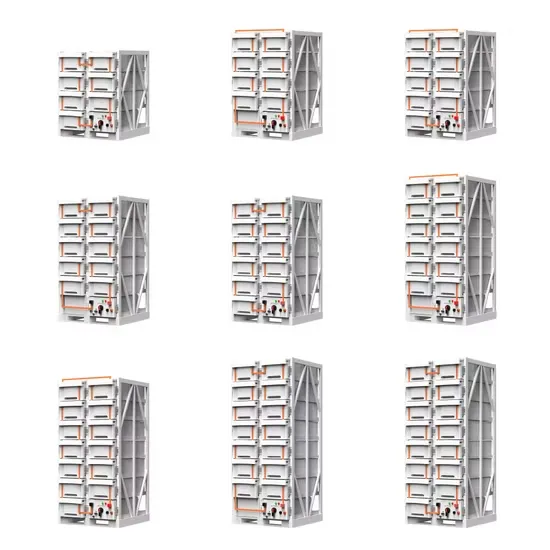
You store renewable energy in batteries by converting solar or wind power into chemical energy inside advanced lithium-ion battery systems. This method addresses efficiency and reliability, especially as global battery storage investment reached $20 billion in 2023. Solutions like the Tesla. . Storing solar energy is crucial for maximizing its use and efficiency. You'll find options that cater to various needs, whether it's extensive home power storage or portable solutions for on-the-go energy. But not all batteries are created. .
[PDF Version]
Most of what you would call large-scale wind turbines typically start turning in winds of seven to nine miles per hour. Their top speeds are around 50-55 mph, which is their upper safety limit. . The environmental payback period refers to the time it takes for a wind turbine to generate energy used during manufacturing and installation. Wind turns turbine blades, which spin a shaft, which is then turned by a gearbox to a second shaft that spins faster. This energy is sent to a generator. . Wind turbines work on a simple principle: instead of using electricity to make wind—like a fan—wind turbines use wind to make electricity. A site with 12 mph wind may appear only slightly better than one with 10 mph wind, but in energy terms, it can result in over 70% more. . Upwind turbines face into the wind, while downwind turbines face away. See more details on how windy it needs to be ? Sufficient separation from noise-sensitive. .
[PDF Version]
However, storing excess wind energy is a complex process that requires innovative solutions such as battery technology, pumped storage, and thermal energy systems. These systems can enhance grid efficiency by utilizing compressed air, flywheel storage, and hydrogen production. . Wind energy, a form of solar energy, is generated by wind turbines and is distributed along the electricity grid power lines to consumers. You'll find options that cater to various needs, whether it's extensive home power storage or portable solutions for on-the-go energy.
[PDF Version]
Wind turbines require a minimum wind speed (generally 12-14 km/h) to begin turning and generating electricity, and strong winds (50-60 km/h) to generate at full capacity. Large-scale wind turbines typically start turning in winds of seven to nine miles per hour, with top speeds. . In this guide, we dive deep into five essential wind speed facts that affect wind turbine performance, output, and system viability. For optimal energy output, the cut-out speed should be 25-55 mph. As wind speed increases, power output escalates until the rated wind speed is achieved and the turbine produces maximum. . Understanding the specific wind speeds required for a turbine to begin, maximize, and cease operation is fundamental to assessing the viability of any wind energy project. Continue reading for an overview of small wind turbines, a more in-depth. .
[PDF Version]
In contemporary energy paradigms, the storage of wind power is achieved through several innovative technologies and strategies, including (1) battery storage systems, (2) pumped hydroelectric storage, (3) compressed air energy storage, and (4) flywheel energy storage. Batteries on a large scale can store extra energy that wind turbines make and then release it when demand is high or wind speeds are low. However, one of the most common questions is: how do wind turbines store energy? Unlike traditional power plants that provide consistent energy supply. . This Topical Digest provides a reading list on the issue of utilising large-scale energy storage methods coupled to an intermittent energy source, like wind. Although energy storage does not produce energy—in fact, it is a net consumer due to. . Wind power will increase balancing needs in the power system. Today system operators balance by adjusting output levels of some of the power plants.
[PDF Version]
Wind turbines, often used in industrial-scale applications, require an electric kick-start to start, overcoming the inertia of turning blades. Wind turns the propeller-like blades of a turbine around a rotor, which spins a generator, which creates electricity. They're serving a very useful purpose, however. There's energy locked in wind and their giant rotors can capture some of it and turn it instantly into electricity. Have you ever stopped to wonder how. . Wind Turbine Start/Stop 👉 Explore the step-by-step startup and shutdown processes of wind turbines, focusing on safety controls and technology that ensure efficient, reliable clean energy production. This action induces electric. . Wind turbines are sophisticated energy systems that combine aerodynamics, mechanical engineering, and electrical generation. While the technology may seem complex, the operating principle is straightforward when explained clearly.
[PDF Version]
 Menu
Menu