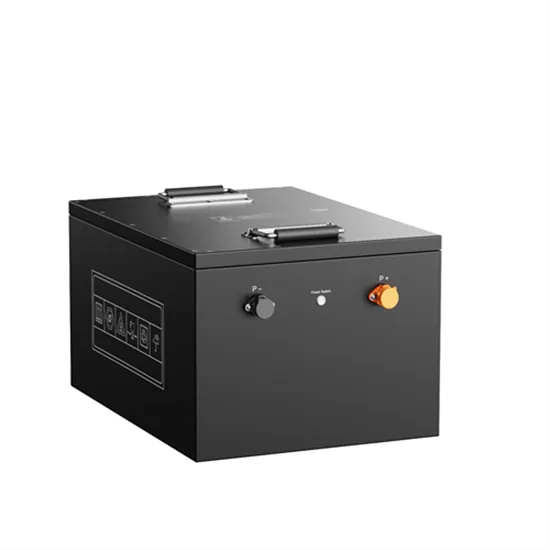
Cabinets often provide better protection, while racks offer easier access for maintenance. Costs, both upfront and long-term, also influence your choice. Cabinets are safer for Li-ion. . When deciding between a cabinet and a rack for storing Li-ion battery packs, you must consider several factors. Space plays a crucial role, especially in environments with limited room. Scalability becomes important if you plan to expand your energy system in the future. Server rack batteries dominate commercial/industrial applications through modular 19″ rack designs, enabling scalable configurations (5–100+. . A server rack battery cabinet is a specially designed enclosure that fits within standard 19-inch server racks to securely house batteries. Universal Compatibility The greatest strength of the 19-inch rack is its interoperability. Whether you're mounting a 1U edge firewall, a 4U GPU server, or a battery-backed. .
[PDF Version]

A 1U server typically uses 200–400W per month, costing around $20–$80. Hence, high-performance environments using 10–20 kW of power may spend between $1,000 and $4,000 each month. . How to Get Started: Colocation with ServerMania As mentioned, the colocation pricing depends on several factors, and the two of them that add the most to the total cost are, of course, space and power. However, if you dig deeper, you will discover that each Colo provider lays out its own billing. . Standard rack installation: $500 to $2,000 per rack. High-density rack installation (for blade servers, etc. of racks and all others information like total it load in MW, area required (sqft), IBMS load, required cooling load, UPS sizing & DG sizing Enter below No. 1,2,10,20), so we can send quotation accordingly. ” “Looking for 1–4U near Bay Area / NYC, 1–2 kW, short month-to-month or 12-month term. It helps improve efficiency and control costs. Strategic factors may include a business' sensitivity to cash flow, deployment timeframe, data center life expectancy, or. .
[PDF Version]
Short Answer: Lithium rack batteries have higher upfront costs but lower long-term expenses due to longer lifespan, minimal maintenance, and better efficiency. Total ownership costs for lithium. . DOE's Energy Storage Grand Challenge supports detailed cost and performance analysis for a variety of energy storage technologies to accelerate their development and deployment The U. With 3-5x longer lifespans, up to 95% efficiency, and compact, safe designs, they are ideal for modern UPS systems. Shenzhen-based Redway Battery. . VRLA (Valve-Regulated Lead-Acid) batteries are a sealed version of lead-acid batteries. VRLA comes in two types: Part 5. The big question is: which battery type offers the best mix of performance, cost and reliability? As data centers grow in size and complexity, the demand for higher. . When businesses invest inLiFePO4 Telecom Battery, one of the first decisions they face is choosing between lithium-ion and lead-acid technologies.
[PDF Version]

Pragmatic Professional Engineers (PPE) played a pivotal role in enhancing the cooling efficiency of a major assembly facility in Houston, Texas. The project focused on optimizing the cooling system for server racks and test stations, ensuring peak performance and reliability. . Higher data transfer speeds, low latency, and constant availability require more computing power, which in turn means higher power densities per rack. And for the performance requirements to be achieved, the servers in the rack must operate at peak capacity, but they also need the optimum. . That's why the cooling and environmental control solutions that Rackmount Solutions offers are designed for today's high-density IT environments, helping to prevent downtime and protect your investment. At Rackmount Solutions, we provide rack, cabinet, and physical infrastructure systems designed. . Rack mount equipment generates heat as a result of the processes it completes; the amount of heat a piece of equipment dissipates is approximately equal to the total electrical power delivered to it. Also thanks to Roger Schmidt for his leadership in driving the creation of this white paper. The liquid cooling. . Turbocharge AI infrastructures with Supermicro's rack-scale complete plug-and-play AI solutions powered by Supermicro SYS-821GE-TNHR or the AS -8125GS-TNHR GPU Servers.
[PDF Version]

Building a server rack typically costs between $5,000 and $50,000+ depending on hardware specifications, scalability needs, and redundancy requirements. . The cost per single rack in the data center depends on a number of factors as follows: The barebones price of a normal server rack ranges from 1000 USD dollars to 5000 USD dollars depending on the material used to make it, its dimensions, as well as additional features that come with it. Grasping these variables helps manage your budget and optimize your server colocation pricing investment. Colocation involves. . Get detailed info about Data center cost as per no. of racks and all others information like total it load in MW, area required (sqft), IBMS load, required cooling load, UPS sizing & DG sizing Enter below No. 1,2,10,20), so we can send quotation accordingly. Platinum), RAM capacity (4GB–256GB+), storage (HDD/SSD arrays), and redundancy features. Entry-level racks for small businesses start at ~¥5,000. . However, one of the first questions companies ask is: How much does a rack in a data center cost? In this article, we break down the factors influencing rack costs, typical pricing structures, and how Go4hosting's data center solutions provide value and flexibility. What Is a Data Center Rack? A. .
[PDF Version]

Key cost factors include: Base Fee – Cost to rent the rack. Cooling Fees – Extra cooling for high-density setups. Equipment Replacement Costs – Higher power use can wear. . Kilowatt per rack (kW/rack) is the power assigned to a server rack in a data center. It is measured in kilowatts (kW) and represents the total power needed for all IT equipment in that rack. of racks and all others information like total it load in MW, area required (sqft), IBMS load, required cooling load, UPS sizing & DG sizing Enter below No. 1,2,10,20), so we can send quotation accordingly. Get detailed. . The server colocation pricing is not fixed and varies based on many factors, even though you own your hardware. Some of the factors that impact the price are your data center space, power requirements, and bandwidth needs, which can grow significantly with the increasing demand and potential. . “Need ½ rack (20–22U) in Dallas / Chicago / NJ with 3–5 kW and 1–10 Gbps. ” “Looking for 1–4U near Bay Area / NYC, 1–2 kW, short month-to-month or 12-month term. Total physical servers or nodes drawing power. Use measured or nameplate × utilization (e.
[PDF Version]
 Menu
Menu